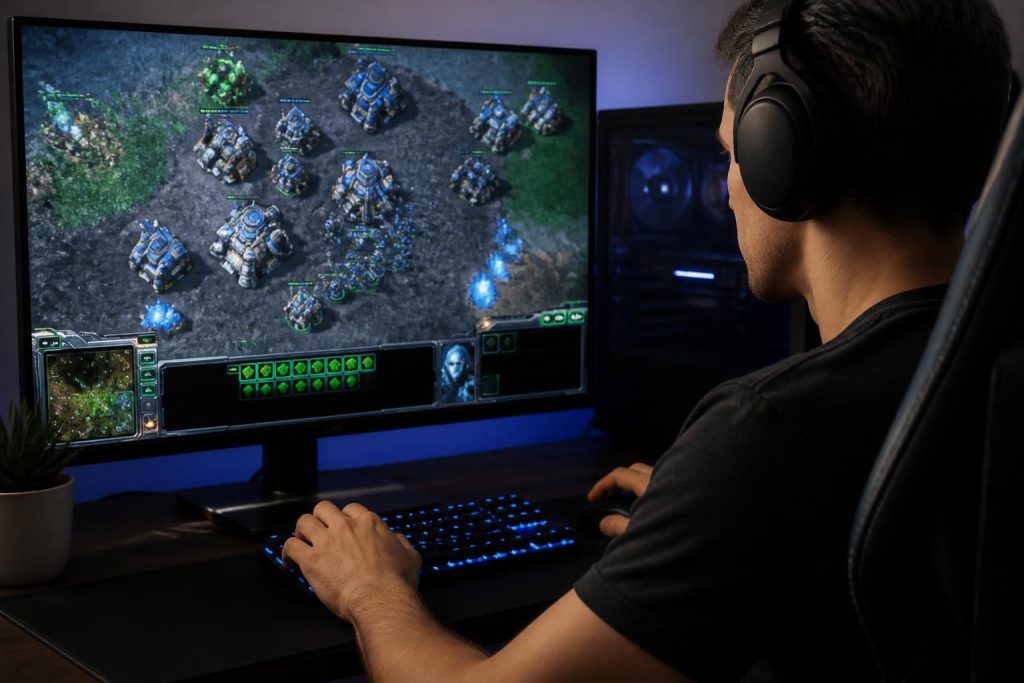
Strategy games and planning skills are not just entertainment; they serve as valuable tools for cognitive development. Engaging in these games requires players to think critically, anticipate opponents’ moves, and devise intricate plans. This combination helps to sharpen various cognitive abilities, including problem-solving, strategic thinking, and decision-making. As the popularity of strategy games continues to rise across gaming platforms, understanding their impact on cognitive skills becomes increasingly important.
Understanding the Cognitive Demands of Strategy Games
When players immerse themselves in strategy games, they enter a world where cognitive challenges abound. These games typically require players to manage resources, navigate complex systems, and formulate long-term strategies. Whether it’s a real-time strategy (RTS) game like StarCraft or turn-based options like XCOM, the necessity to process information quickly and make sound decisions under pressure is prevalent.
Research has shown that engaging with such games can enhance various cognitive skills. Players must evaluate numerous variables simultaneously, making analytical thinking crucial. For instance, understanding the strengths and weaknesses of different units or resources can lead to a significant advantage in gameplay. This constant engagement reinforces neural pathways associated with planning and evaluation, thereby boosting overall cognitive function.
The Role of Planning Skills in Game Strategy
Planning skills are at the forefront of successful gameplay in strategy games. Players must create a roadmap for achieving their objectives, often involving multi-step plans that take into account potential adversities. This involves not only strategic foresight but also the ability to adapt plans as situations unfold. The necessity to pivot strategies in response to an opponent’s actions serves as a real-time exercise in flexible thinking.
For example, in games like Civilization, players must plan not only for immediate resources but also for future technological advancements and diplomatic engagements. Achieving game objectives often hinges on the player’s ability to anticipate future scenarios and prepare accordingly. This type of forward-thinking mirrors real-life planning skills required in various professional and personal contexts, showcasing the broader implications of these games on planning abilities.
Improving Problem-Solving Abilities Through Strategic Gameplay
As players navigate through challenges in strategy games, they are often faced with complex problems that require innovative solutions. Engaging with these scenarios fosters a mindset geared towards problem-solving. Each decision made in these games can lead to a multitude of outcomes, encouraging players to weigh consequences before taking action.
For instance, in a game like Age of Empires, players are frequently challenged to balance military development with economic growth. This dual focus necessitates critical thinking and the ability to solve problems on the fly. Players learn to identify and exploit weaknesses while reinforcing their strengths, honing skills that are valuable in everyday life. The ability to analyze situations, formulate solutions, and implement strategies effectively can translate to improved performance in real-world problem-solving scenarios.
The Long-Term Benefits of Engaging with Strategy Games
The cognitive benefits of playing strategy games extend beyond the gaming session itself. Studies suggest that consistent engagement can lead to long-term improvements in cognitive abilities. Players who frequently engage with strategy games often exhibit enhancements in working memory, attention, and executive function.
Moreover, as players invest time in these games, they develop a greater understanding of complex systems and dynamics. This understanding can be beneficial in various fields, such as business, engineering, and even social interactions. For example, the ability to anticipate the reactions of others or to devise strategic partnerships can be nurtured through gameplay. Ultimately, strategy games and planning skills cultivate a mindset that is adaptable and resourceful, preparing players for challenges that extend beyond the screen. For more on this topic, see PGSLOT.
Strategy Games in Educational Settings
Recognizing the cognitive benefits of strategy games, educators are increasingly integrating them into learning environments. Educational institutions are leveraging these gaming experiences to enhance student engagement and develop critical thinking abilities. Games that emphasize strategy and planning can turn abstract concepts into interactive experiences, allowing students to apply theoretical knowledge in practical scenarios.
For example, simulations that mimic historical events or economic principles allow students to experiment with cause-and-effect relationships. This immersive approach can promote deeper understanding and retention of complex subjects. Furthermore, collaborative strategy games foster teamwork and communication skills, essential components of a well-rounded education.
Some educators have even noted parallels between strategy game mechanics and crucial real-world skills. Skills learned in games can be directly applicable to fields such as project management or urban planning, where strategic foresight and adaptive planning are necessary. As such, strategy games serve as a bridge between entertainment and education, showcasing the versatility of planning skills in diverse contexts.
Incorporating Strategy Games into Daily Life for Cognitive Enhancement
For those looking to enhance their cognitive abilities, integrating strategy games into daily life can be a beneficial choice. Whether through dedicated gaming sessions or casual play, these games offer a fun and engaging way to exercise the mind. Platforms like PGSLOT provide various strategy game options that cater to different preferences and skill levels.
Additionally, players can opt for mobile apps or PC games that allow for quick bursts of gameplay, making it easy to fit cognitive training into a busy schedule. By consistently challenging oneself with new scenarios and strategies, players can ensure ongoing cognitive development and improvement in their planning skills.
Moreover, forming or joining gaming communities can further enhance the experience. Engaging with others who share similar interests not only offers social interaction but also exposes players to diverse strategies and approaches, enriching their gameplay experience and cognitive growth.
In conclusion, strategy games and planning skills are intricately connected, providing players with not only a source of entertainment but also a medium for cognitive enhancement. The skills developed through engaging with these games, such as critical thinking, problem-solving, and strategic planning, have far-reaching implications that extend into real-life scenarios. As players continue to explore the depths of strategy games, they cultivate a mindset that values foresight and adaptability, preparing them for the complexities of both gaming and life. The exploration of strategy in gaming continues to prove that it is more than just a pastime—it is a valuable tool for developing essential cognitive skills.